
Mill Pipe Production: Precision ERW Lines for Consistent Tubular Products
In the world of tubular manufacturing, the term mill pipe refers to high-quality welded pipe produced on electric resistance welding (ERW) lines. SANSO has engineered complete tube mills for this purpose for over 20 years, delivering lines that turn steel strip into precise mill pipe from 8 mm to 508 mm diameter. This article explores the equipment, processes, and best practices behind reliable mill pipe manufacturing—always with a focus on real-world production floors.
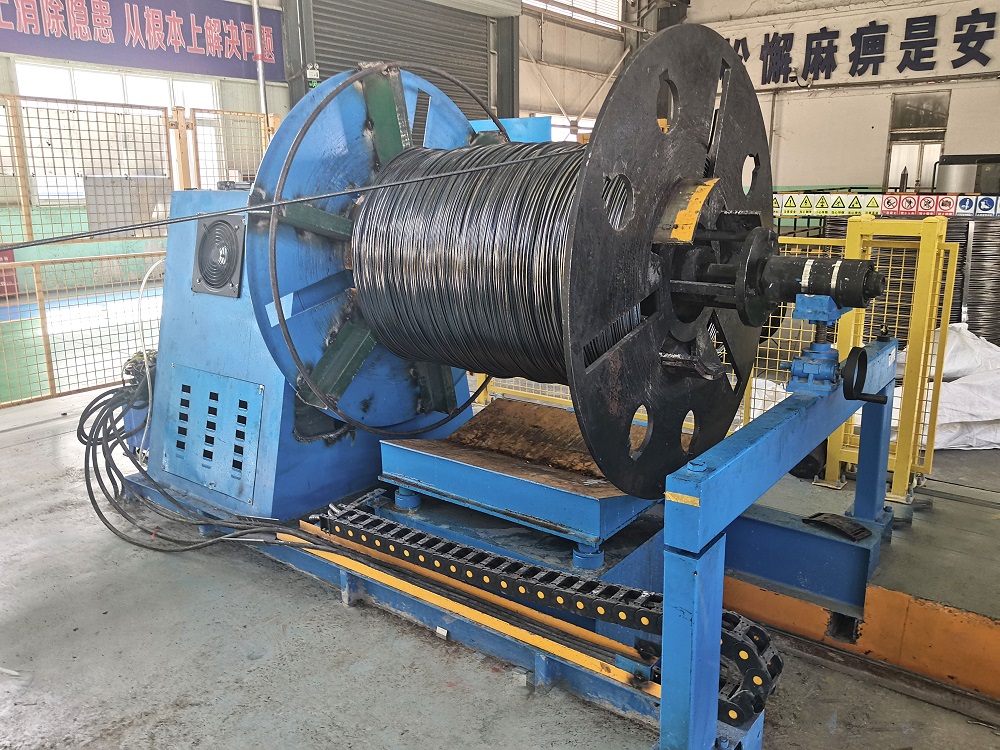
How Modern ERW Mills Produce High-Grade Mill Pipe
Today's mill pipe is made through a continuous forming and welding process. Flat steel coils enter the line, are gradually shaped into a cylinder, and then high-frequency current welds the edges. After weld scarfing, the pipe is sized, cut, and finished. The entire sequence depends on precise mill setup and robust components. SANSO provides integrated lines where each station—from uncoiler to accumulator—works in harmony to maximize mill pipe output and quality.
A typical ERW mill pipe production line includes these key stages:
Uncoiling & leveling: Flattening the strip and controlling tension.
Forming section: Breakdown and fin passes that shape the strip without buckling.
Welding & scarfing: High-frequency welding followed by internal/external bead removal.
Sizing & straightening: Achieving final diameter and straightness tolerances.
Cutting & bundling: Flying cut-off saws and automatic stackers.
Key Equipment That Defines Mill Pipe Quality
Every component in the line influences the final mill pipe. Below we focus on three critical areas where SANSO engineering makes a difference.
Forming Stands and Roll Tooling
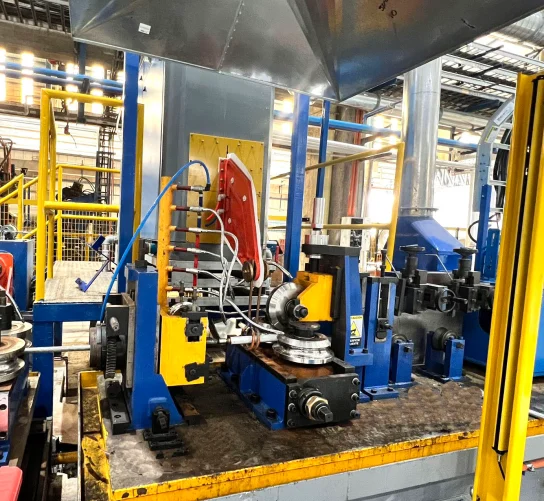
The forming section contains a series of roll stands that gradually bend the strip. Precision-ground rolls, matched to the exact pass design, prevent edge waves and ensure uniform wall thickness. Mill pipe with consistent geometry starts here.
High-Frequency Welder and Induction Coils
Clean, strong welds are essential for mill pipe integrity. SANSO lines use solid-state welders with power from 200 kW to 800 kW, depending on line speed and wall thickness. Impeder positioning and coil design are optimized for each product size.
Accumulators for Continuous Operation
To allow coil changes without stopping the mill, horizontal spiral accumulators store strip. SANSO's accumulators ensure smooth tension control, so mill pipe production continues seamlessly during strip feeding.
With SANSO, you get a fully integrated system—from entry equipment to exit stacker—designed specifically for your mill pipe dimensions and metallurgy.
Materials and Grades: What Mill Pipe Can Be Made From?
ERW lines are versatile. Common materials for mill pipe include:
Low-carbon steel (ASTM A53, A500): for structural and general applications.
High-strength low-alloy (API 5L X42–X70): for oil and gas transmission.
Stainless steel (304, 316): for corrosion-resistant piping.
Precision tubes for automotive: often with tighter tolerances.
SANSO's mill pipe lines can be configured with additional features like in-line annealing or NDT testing for high-spec grades.
Quality Control Throughout Mill Pipe Manufacturing
Producing consistent mill pipe requires monitoring at every step. Modern mills incorporate:
Ultrasonic testing: detects weld flaws and lamination.
Eddy current arrays: check for surface defects immediately after welding.
Diameter gauges: provide feedback to the sizing stand.
Hydrostatic testers: verify pressure integrity for critical lines.
SANSO offers integration of these QC systems, ensuring that every length of mill pipe meets your specifications before it leaves the line.
Maintenance Strategies for Uninterrupted Mill Pipe Production
Downtime is expensive. A proactive maintenance plan keeps the mill running and mill pipe quality high.
Roll Shop Management
Forming and sizing rolls need regular regrinding. Keep a spare set of mill pipe rolls for quick changeovers. SANSO provides complete roll drawings and regrind specifications.
Welding Station Checks
Inspect contacts, induction coils, and impeders daily. Clean seams mean consistent mill pipe weld strength.
Lubrication and Wear Parts
Bearings, gearboxes, and guide liners should follow a scheduled replacement. SANSO's mill pipe lines are designed for easy access to wear components.
Scaling Production: From Small to Large Diameter Mill Pipe
One line cannot efficiently cover all sizes. SANSO offers different series:
Light series: 8–76 mm for furniture, conduit, precision tubes.
Medium series: 20–168 mm for structural and general piping.
Heavy series: up to 508 mm for line pipe and piling applications.
Each configuration is optimized for the wall thickness and yield strength of the intended mill pipe.

Future-Ready Features in Modern Mill Pipe Lines
Industry 4.0 is arriving in tube mills. Sensors now track vibration, temperature, and motor loads in real time. Data analytics help predict when a roll or bearing might fail. SANSO offers upgrade packages to bring these capabilities to existing mill pipe lines, reducing unplanned stops and extending equipment life.
From entry coil to finished bundle, high-quality mill pipe is the result of well-engineered equipment, proper tooling, and attentive operation. SANSO stands ready to support you—whether you need a complete new line, a critical component like an accumulator, or technical advice to improve your current mill pipe output. Contact our team to discuss your project and see how decades of experience can benefit your production goals.
Frequently Asked Questions About Mill Pipe
Related News
More -
Mill Pipe Production: Precision ERW Lines for Consistent Tubular Products
In the world of tubular manufacturing, the term mill pipe refers to high-quality welded pipe produced on electric resistance welding (ERW) lines. SANS ...2026-02-26View More -
Precision Mill Pipe Manufacturing: Technical Deep Dive into Welded Linepipe Production
In modern industrial infrastructure, the role of consistent and defect-free welded pipe cannot be overstated. Mill pipe — the output of continuous f ...2026-05-19View More
-
 Why Does Your Tube Mill Cut-Off Leave Burrs? An Engineering Analysis
 -
 Ferrite Core Service Life and Function in Tube Mills
 -
 How Much Zinc Wire Is Used for 1 Ton of Galvanized Tube
 -
 Why Does Your Tube Mill Require a High-Quality Saw Blade HSS for Clean Cuts?
 -
 How Tube Mill Equipment Flips Rectangular Tubes Before Stacking